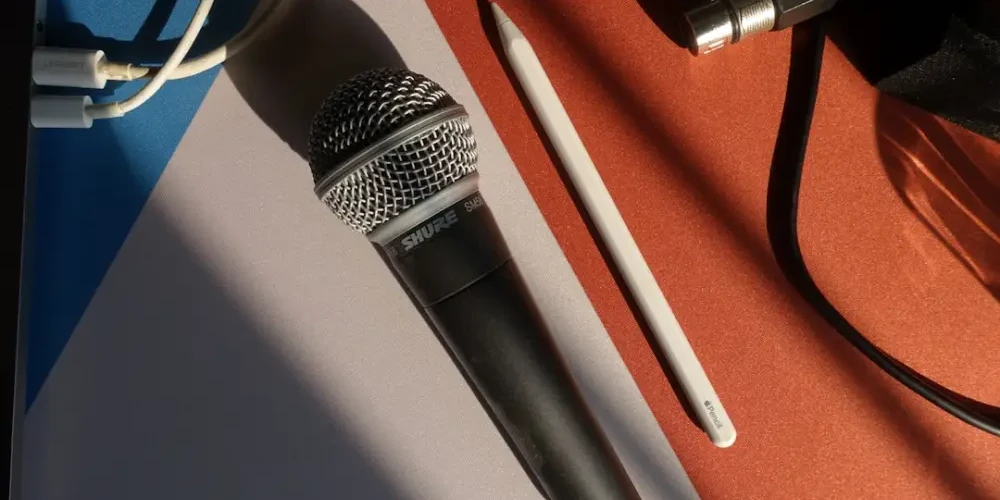

The Myth of ‘Good Enough’ USB Audio
In the world of modern podcasting and sound production, convenience has become the enemy of excellence. We live in an era where ‘plug-and-play’ is marketed as the ultimate virtue, leading thousands of creators to believe that a $100 USB microphone is all they need to compete with the heavyweights. But here at Calypso Room, we see the reality behind the digital curtain: USB microphones are a bottleneck. They are a ceiling that prevents your voice from ever reaching its full potential.
If you are serious about your sonic identity, it is time to stop acting like a hobbyist and start treating your signal chain with the respect it deserves. Moving to an XLR setup isn’t just about changing a cable; it’s about graduating from a toy to a tool. It is the fundamental shift from capturing noise to crafting sound.
The Internal Anatomy of Compromise
To understand why XLR changes your sound, you have to understand what is happening inside a USB microphone. A USB mic is a jack-of-all-trades and a master of none. Inside that single chassis, the manufacturer has to cram a microphone capsule, a preamplifier, and an analog-to-digital (A/D) converter. When you try to fit all those components into a tiny space for a budget price, quality is the first thing to be sacrificed.
The preamps in most USB microphones are notoriously ‘thin.’ They lack the headroom required to capture the nuances of human speech, often resulting in a sound that feels brittle or ‘digital.’ When you switch to an XLR microphone, you are decoupling these components. You are choosing a dedicated microphone, a dedicated preamp, and a dedicated interface. This separation is where the magic happens.
The Power of the Dedicated Interface
When you move to an XLR system, the heavy lifting is moved to an external audio interface. This provides several immediate advantages that a USB cable simply cannot replicate:
- Superior Preamplification: External interfaces provide cleaner gain, meaning you can boost your volume without introducing that annoying background hiss (the noise floor).
- Higher Bit Depth and Sample Rates: Dedicated hardware handles the conversion from analog to digital with much higher precision, preserving the ‘warmth’ of your natural voice.
- Phantom Power: XLR allows you to use true condenser microphones that require 48V of power, offering a level of sensitivity and detail that USB-powered devices can’t touch.
Modularity: The Secret Sauce of Sonic Character
One of the most frustrating aspects of USB microphones is their lack of flexibility. If you don’t like the way a USB mic sounds, your only option is to throw it away and buy a new one. You are stuck with that specific capsule and that specific internal processor forever. In the professional world of sound production, this is an unacceptable limitation.
Moving to an XLR setup introduces modularity. The microphone becomes a choice, not a permanent sentence. Every voice is different; some voices need the dark, rich proximity effect of a dynamic mic like the Shure SM7B, while others benefit from the crisp, airy top-end of a high-quality condenser. With an XLR setup, you can swap microphones to suit the project while keeping your consistent signal chain. This allows you to build a ‘sonic signature’—a texture that is uniquely yours and instantly recognizable to your audience.
Why Customization Matters for Narratives
In narrative podcasting, the voice is the only vehicle for the story. If that vehicle is clunky and distorted, the story suffers. An XLR setup allows you to fine-tune your input before it ever reaches your computer. Whether it’s using an outboard compressor or simply choosing a mic that complements your tone, this level of control is what separates a bedroom recording from a studio production.
The Longevity and Professionalism Argument
Let’s talk about the ‘disposable tech’ problem. USB standards change. USB-A gave way to USB-C, and eventually, today’s ports will be obsolete. When the port becomes outdated, your USB microphone becomes a paperweight. XLR, however, is a professional standard that has remained virtually unchanged for decades. An XLR microphone you buy today will still be compatible with interfaces thirty years from now.
Furthermore, there is a psychological shift that occurs when you move to professional gear. When you stand in front of a dedicated XLR broadcast arm with a proper shock mount and a real interface, your performance changes. You treat the session with more gravity. You speak with more intention. Professional sound isn’t just about the electrons moving through the wire; it’s about the confidence that comes from knowing your equipment isn’t holding you back.
Final Thoughts: Stop Settling for Convenience
The argument that ‘listeners won’t notice the difference’ is a lazy excuse for mediocrity. While a casual listener might not be able to name the specific preamp you’re using, they absolutely feel the difference in ‘ear fatigue.’ High-quality XLR audio is smoother, more natural, and easier to listen to for long periods. If you want people to spend forty minutes with your voice every week, don’t make it a chore for their ears.
It is time to leave the ‘all-in-one’ solutions to the amateurs. If you want to build a legacy in the modern sound landscape, you need the depth, the clarity, and the soul that only an XLR signal chain can provide. At Calypso Room, we believe in the art of the audio process—and that process begins with the right connection.
Related Posts
How artificial intelligence is actually changing the way we hear voices
Explore how AI is revolutionizing voice…